


Early Spring Gardening Checklist
Complete these early spring gardening tasks as the weather warms to get your garden ready for prime blooming and planting season.
Winter weather can be brutal on landscapes—especially during years when deep cold arrives suddenly or lingers longer than usual. While extreme low temperatures are the most obvious threat, they’re far from the only way winter can injure trees, shrubs, and perennials.
Below are five of the most common ways winter damages plants, how to recognize the symptoms, and what you can do to prevent problems before spring.
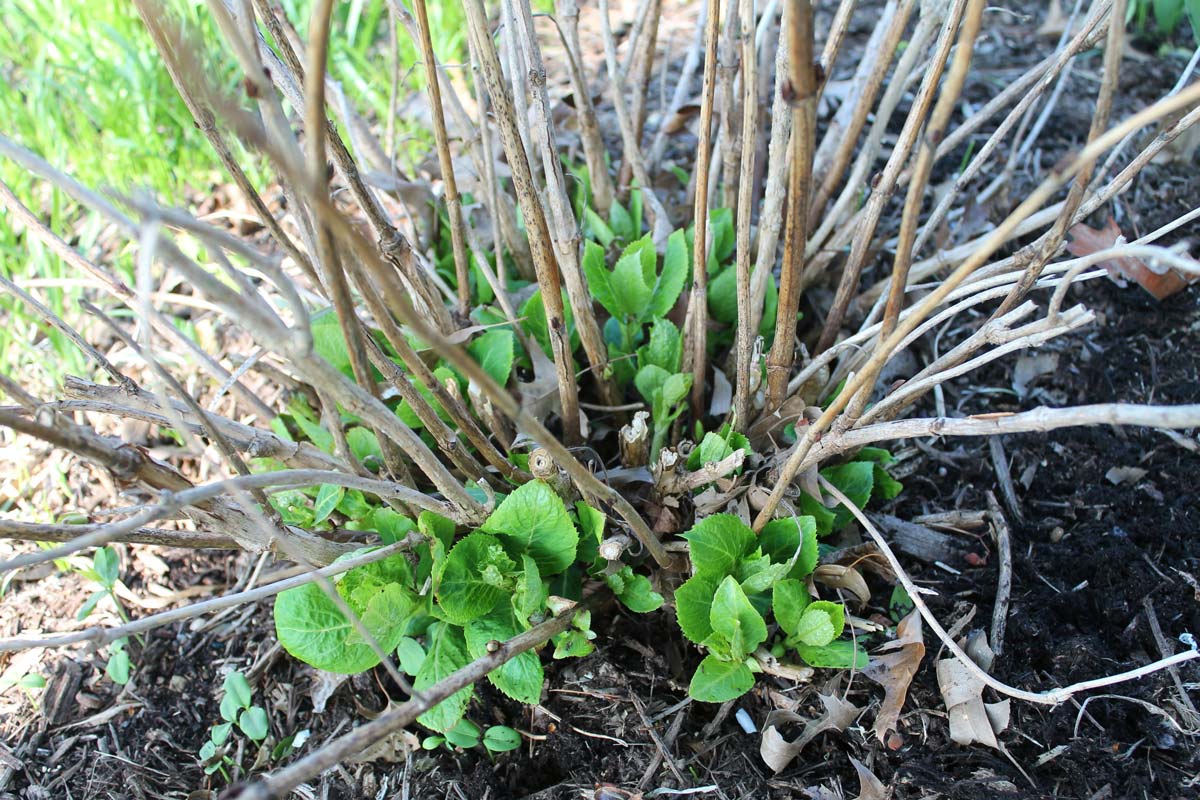
New growth is emerging from this hydrangea in spring after winter killed all of the previous top growth. Photo by George Weigel
Every plant species has a genetic limit for how cold it can get before leaves, branches, buds, and roots are injured.
Plants native to very cold climates can tolerate sub-zero temperatures without their cells rupturing. Plants native to warm climates, however, can suffer damage even when nighttime temperatures drop into the 40s.
These differences are the foundation of the USDA Plant Hardiness Zone Map, which divides the U.S. into zones based on average winter minimum temperatures. Most plants sold in nurseries are labeled by zone.
Common symptoms of freeze damage
How to reduce freeze damage
Important: Don’t prune too soon
Freeze damage can look worse than it is. Wait until spring is well underway before pruning or removing plants—new growth often appears from stems or the base that seemed dead in winter.
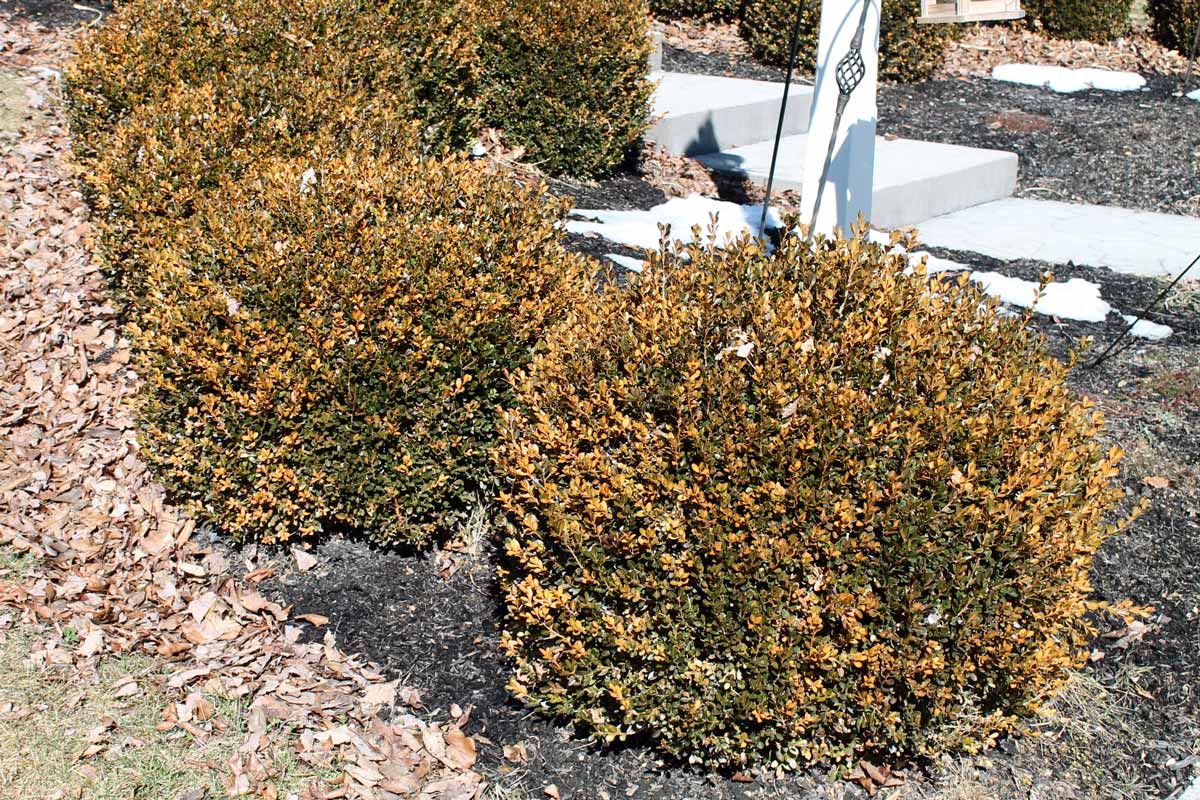
These boxwoods have been badly browned from winter burn. Photo by George Weigel
Winter burn is most common on evergreen plants, especially broadleaf evergreens.
Even in winter, evergreens continue losing moisture through their foliage. When the ground is frozen, roots can’t replace that moisture—especially during cold, windy weather. The result is dehydrated foliage that turns brown and scorched-looking.
Plants most at risk
Needled evergreens can get winter burn too, but broadleaf evergreens are typically more vulnerable.
Symptoms of winter burn
How to prevent winter burn
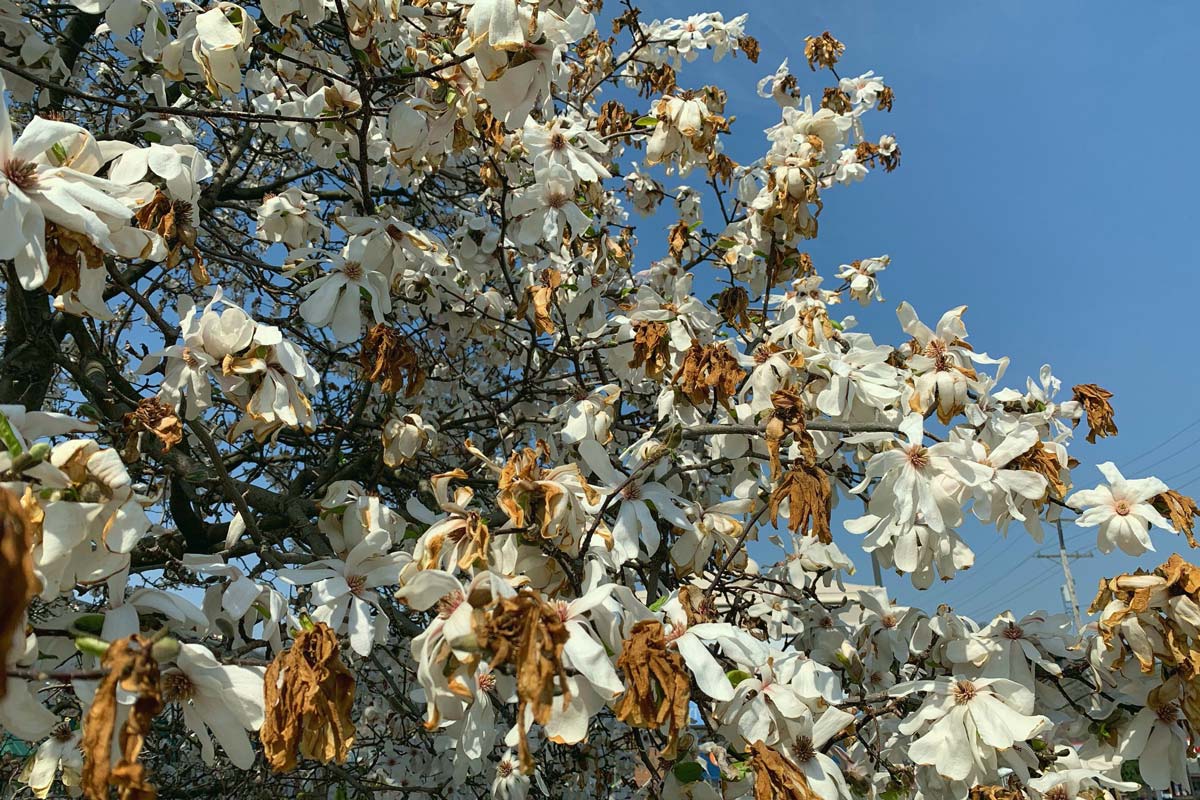
A sudden frost following a warm spell has browned the flower petals on this magnolia tree. Photo by George Weigel
Plants are often most cold-hardy when fully dormant in midwinter. The bigger danger comes when plants begin waking up too early.
A warm spell can “trick” plants into breaking dormancy and swelling buds—then a sudden frost kills tender new growth.
This type of winter damage is becoming more common in many regions because winter weather patterns are less predictable than they used to be.
Symptoms of frost injury
What gardeners can do
You can’t control the weather, but you can sometimes reduce damage:
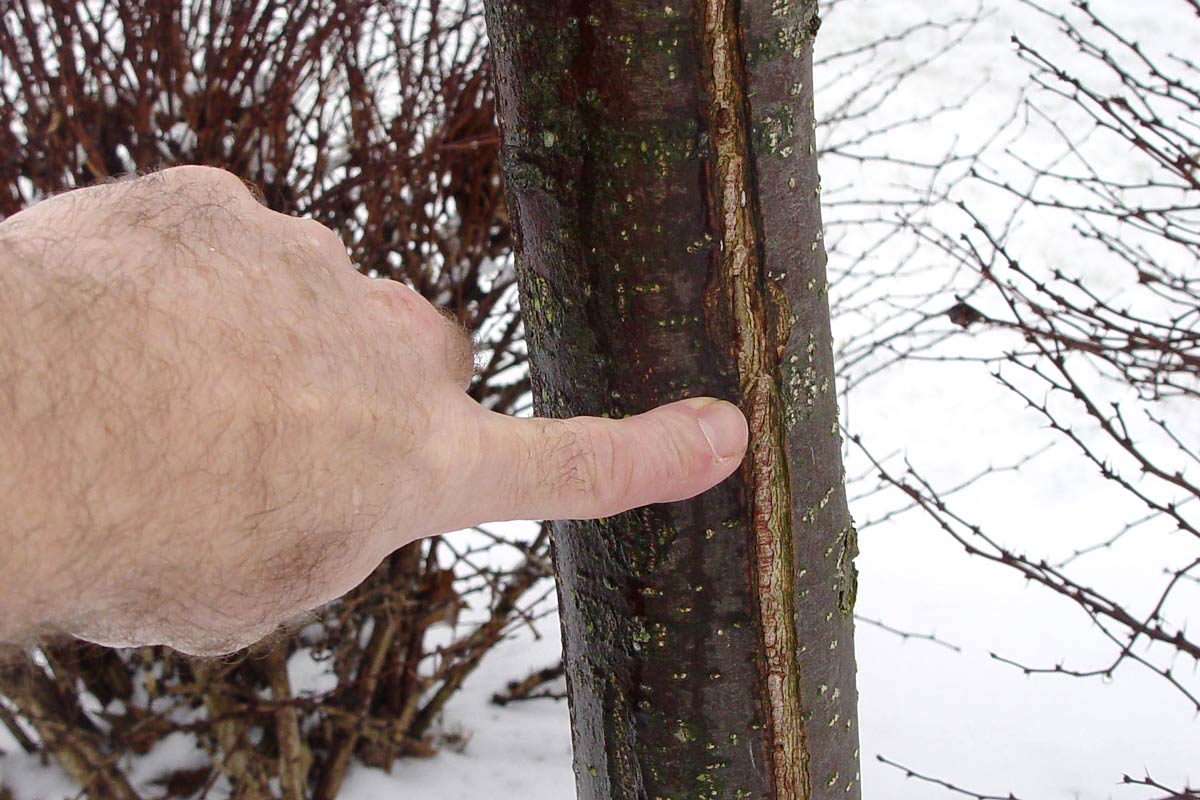
This vertical crack in a crabapple tree resulted from quick thawing following a cold night. Photo by George Weigel
Some winter damage happens not from cold alone, but from rapid temperature swings.
Sunscald
Sunscald occurs when winter sun quickly warms tree bark during the day after a cold night. That rapid warming can kill inner bark tissue.
Sunscald is most common on thin-barked trees such as:
It typically appears on the south or southwest side of the trunk, where sun exposure is strongest.
Frost cracks
Frost cracks happen in a similar way. When tissue warms quickly, it expands and can split vertically—sometimes with an audible snap.
Frost cracks often callus over in summer but may reopen in future winters, creating weak spots that can invite disease.
Best prevention for both
Wrap susceptible trunks in winter using:
Remove wraps in spring.
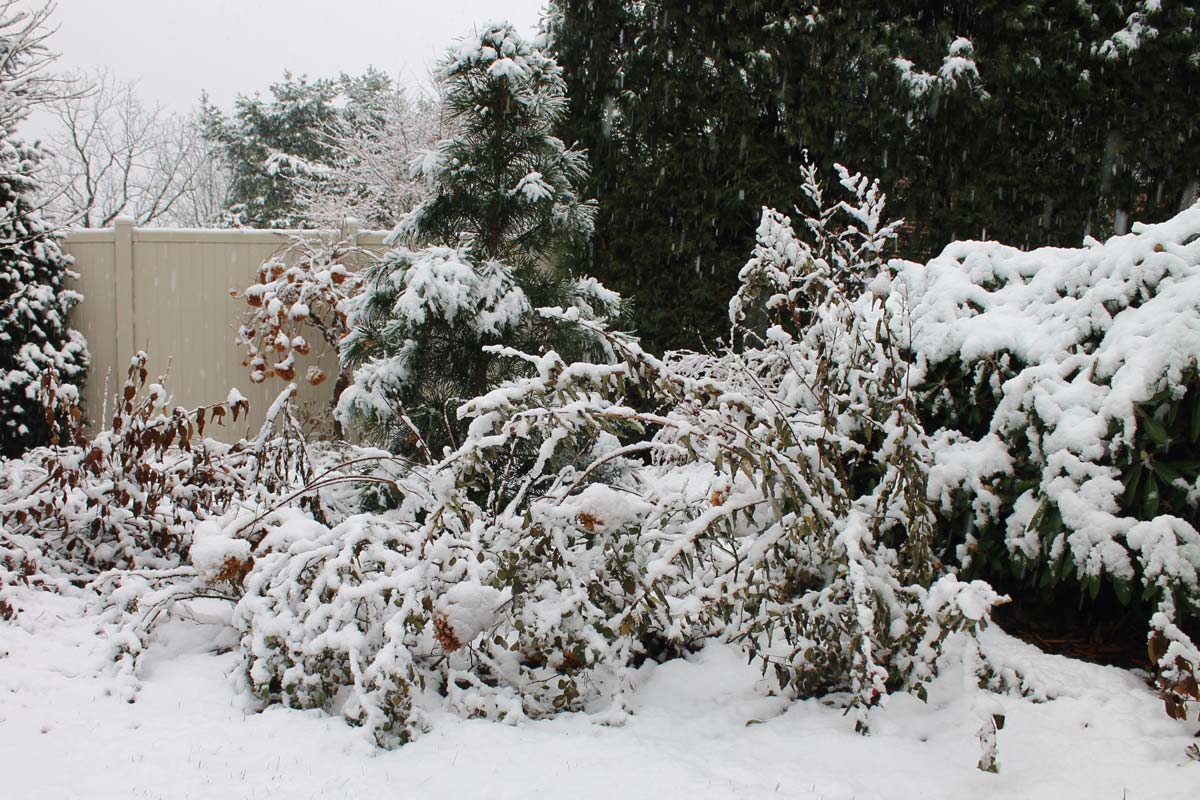
Winter can damage landscape plants in a variety of ways, ranging from cold temperatures to branch breakage from snow loads. Photo by George Weigel
A consistent snow cover can actually help protect plants. Snow is an excellent soil insulator and reduces repeated freezing and thawing that can heave perennial roots out of the ground.
The real threat comes from:
Common snow and ice damage
How to prevent snow and ice damage
If breakage happens
Winter injury isn’t just “it got cold.” Plants can be harmed by dehydration, temperature swings, late frosts, and physical breakage—even if temperatures stay within normal winter ranges.
If you’re dealing with winter damage this year, the best approach is usually patience: wait until spring growth begins before making major pruning or removal decisions.
What is the most common type of winter plant damage?
Freeze damage and winter burn are two of the most common winter injuries. Freeze damage affects leaves, stems, and roots from extreme cold, while winter burn is dehydration damage most often seen on evergreens.
Why do evergreen shrubs turn brown in winter?
Evergreens can turn brown from winter burn. Cold winds and sun cause moisture loss through foliage, and frozen ground prevents roots from replacing that moisture.
Should I prune plants immediately after winter damage?
Usually no. Wait until spring is established. Many plants push new growth from stems or the base even if they look dead in late winter.
What trees are most prone to sunscald?
Thin-barked trees such as maples and cherries are more prone to sunscald, especially on the south and southwest sides of trunks.
Does snow protect plants or damage them?
Both. A steady snow cover insulates soil and protects roots. But heavy snow, ice storms, and roof slides can break limbs and flatten shrubs.