



Some of Our Worst Weeds Once Were Favorite Plants
Some plants now considered invasive were intentionally introduced to gardens.
Spring is a time of year when gardeners start to grapple anew with plants that are growing beyond their intended space – or growing where they aren’t wanted at all.
These are not exactly “weeds” but rather flowers and groundcovers that just turned out to be more aggressive than the planter thought.
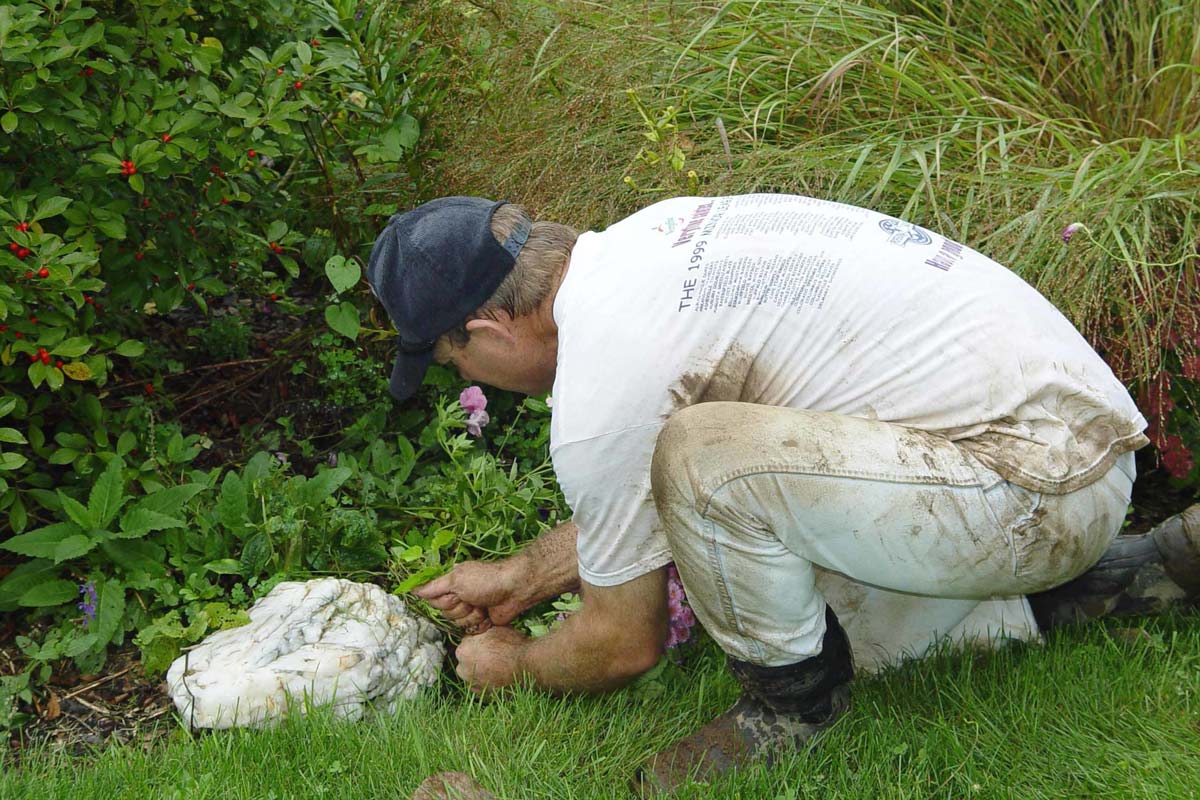
Dug-up divisions of plants from other gardeners’ yards don’t always make good gifts. Photo by George Weigel
“Surplus plants” is a nice way to describe them.
But since gardeners tend to be benevolent and nurturing souls, they often have a hard time digging and tossing these frisky extras.
And so lots of gardeners – dug-up rootballs in hand – can be found in spring looking for foster parents for their botanical castoffs.
Sometimes these plants end up at plant sales, plant exchanges, and yard sales.
This doesn’t mean you should run the other way when you see a neighbor heading your way with a mystery clump.
Sometimes pass-along plants turn out to be welcome gifts. If the culled-out plants aren’t invasive and match a site in your yard, this is a great way to fill or expand garden space at no cost. And the digger-outer feels as if he/she has saved a plant’s life while doing a good deed for a friend.
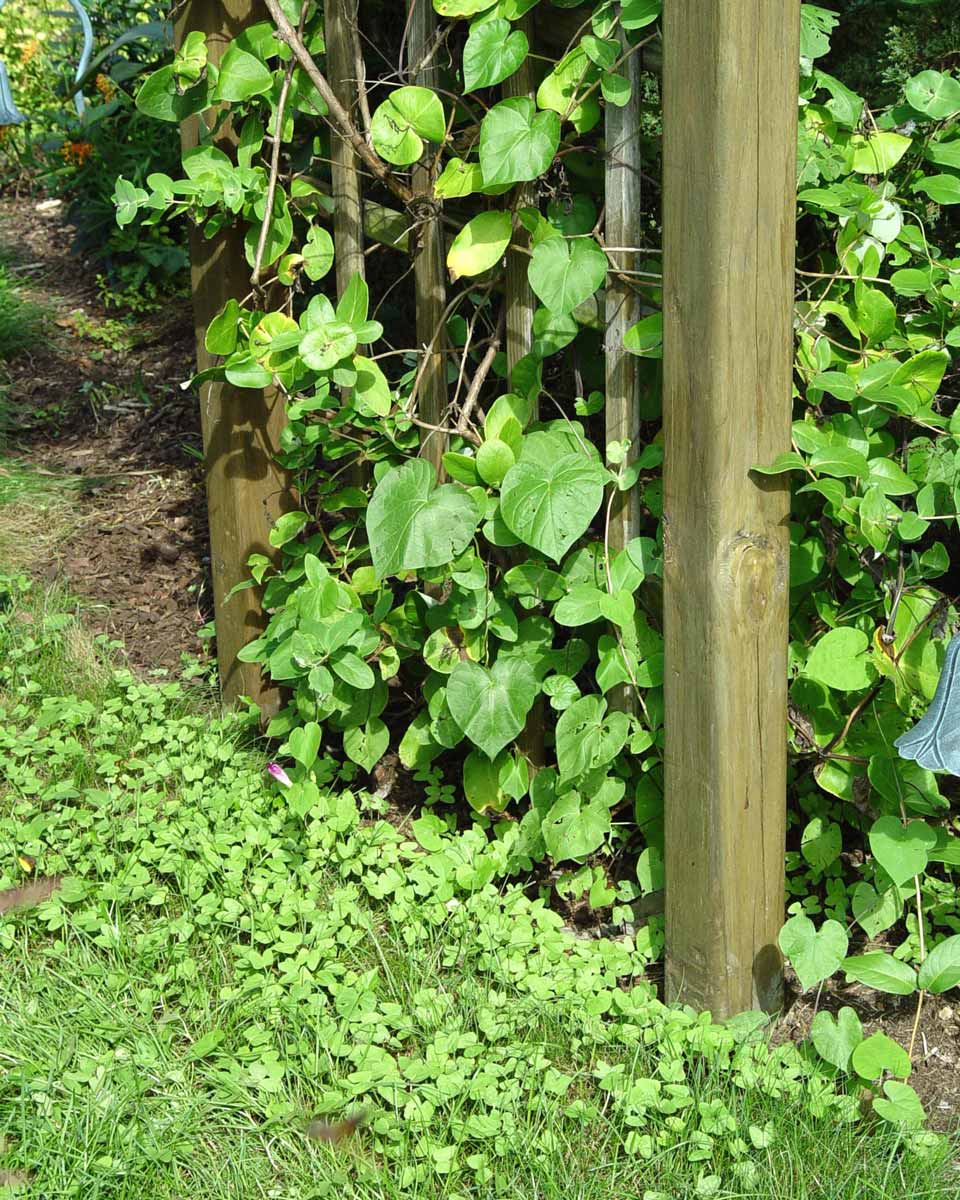
Seeds from these morning glory vines have sprouted in the lawn below. Photo by George Weigel
On the other hand, sometimes these plants merely transfer an invasiveness issue from one yard to another.
In other words, people tend to dig and get rid of what’s turned out to be overly aggressive for them.
The trick is sorting out the good stuff from the Trojan horses.
If you’re not familiar with an offered plant, ask the giver the key questions of how much it spreads and how often he or she has to thin it out.
Also, ask how freely the plant might seed. Some plants churn out seedlings all over the yard for years, such as nigella (love-in-a-mist), morning glories, hardy ageratums, and bronze fennel.
With any luck, the giver will know the name of the plant so you can at least look it up in a good garden book or online before planting. Be wary if any descriptions mention words such as “invasive,” “aggressive,” or catalog-writers’ favorite code word, “vigorous.”
You might also check your state’s Noxious Weed List to make sure you’re not accepting something in the worst-of-the-worst category.
Where you decide to plant a pass-along can make a difference as well.
Example: A neighbor may have a planting of variegated bishop’s weed or ajuga that looks to be reasonably well behaved under a big shade tree. But if you take divisions of those same plants home and put them in good soil in a perennial border, they can become thugs.
Beyond the invasiveness issue, decide if you even like the look and habit of the plant. Ask yourself if there’s a spot in your yard where it’ll fit in and make sense. Don’t ruin an otherwise nice design with a newcomer just because it came free.
A plant’s invasiveness can vary from region to region, but some are aggressive just about everywhere.
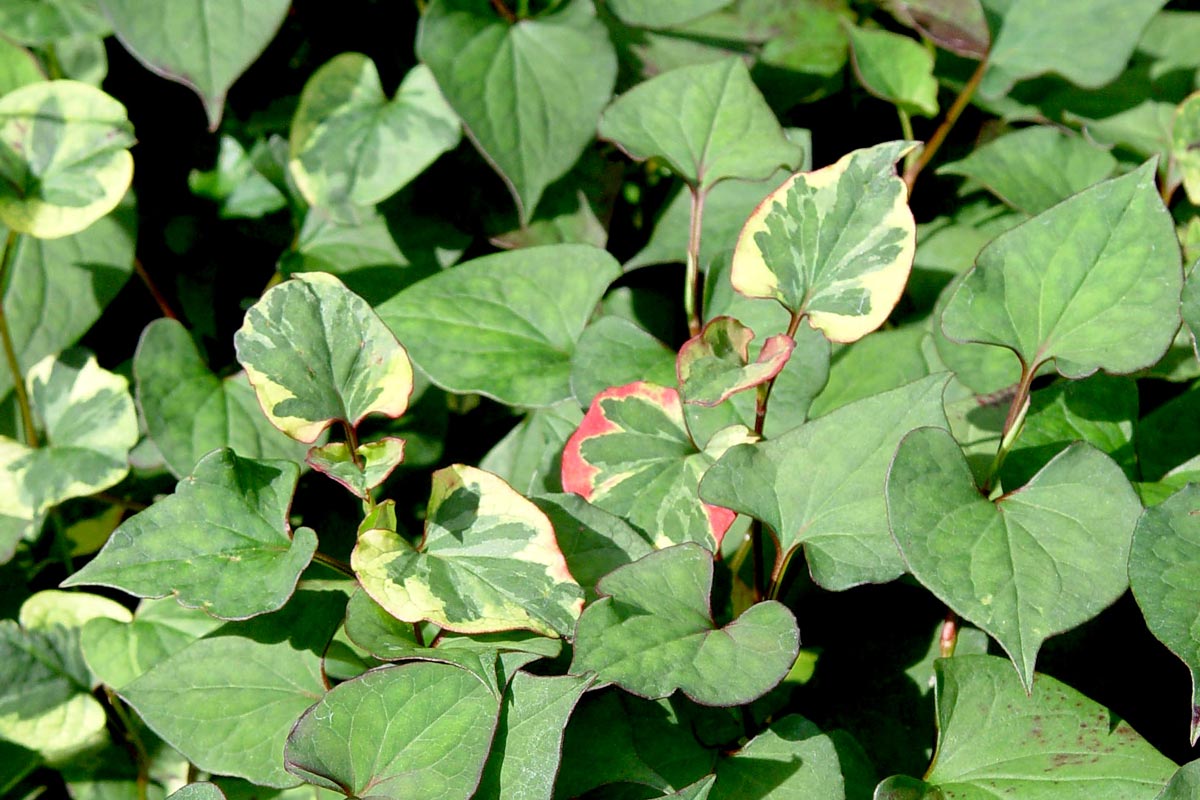
Chameleon plants are attractive with their pink-variegated leaves, but it’s a species that can quickly colonize into unwanted areas.
Here are 10 to watch out for:

Purple loosestrife is an upright, purple-blooming perennial that some states have banned for its invasive seeding.
|
Plant |
Category |
Notes |
|
Obedient Plant |
Perennial |
Spreading perennial that can form large colonies. |
|
Evening Primrose |
Perennial |
Self-seeding perennial that spreads easily. |
|
Mint |
Perennial Herb |
Aggressive spreading herb; best grown in containers. |
|
Spearmint |
Perennial Herb |
Very vigorous mint that spreads by underground runners. |
|
Lemon Balm |
Perennial Herb |
Seeds and spreads freely in many gardens. |
|
Lily of the Valley |
Perennial (Rhizome) |
Fragrant groundcover that spreads aggressively in shade. |
|
Tawny Daylily |
Perennial |
Hardy daylily that naturalizes quickly. |
|
Snow-in-Summer |
Groundcover Perennial |
Fast-spreading groundcover for sunny areas. |
|
Creeping Bellflower |
Perennial |
Deep-rooted perennial that is difficult to remove once established. |
|
Gooseneck Loosestrife |
Perennial |
Spreads by underground runners in moist soil. |
|
Tansy |
Perennial |
Spreading perennial herb that can become invasive. |
|
Yellow Flag Iris |
Perennial (Rhizome) |
Moisture-loving iris that spreads aggressively in wetlands. |
|
Crown Vetch |
Groundcover Perennial |
Often used for erosion control but spreads rapidly. |
|
Bishop’s Weed |
Groundcover Perennial |
Variegated foliage plant that spreads vigorously. |
|
Ribbon Grass |
Ornamental Grass |
Fast-spreading grass, especially in damp soil. |
|
Bamboo |
Grass |
Some species spread aggressively via underground runners. |
|
English Ivy |
Groundcover / Vine |
Aggressive evergreen vine that can spread rapidly. |
|
Sweet Autumn Clematis |
Vine |
Vigorous climber that can reseed heavily. |
|
Purple Loosestrife |
Perennial |
Invasive wetland plant banned in some states. |
|
Dame’s Rocket |
Biennial |
Self-seeding flower that spreads readily. |
|
Honesty |
Biennial |
Attractive seed pods but spreads by reseeding. |
|
Johnny-jump-ups |
Short-lived Perennial / Annual |
Small violas that reseed freely. |
|
Sweet Annie |
Annual |
Aromatic annual that self-seeds heavily. |
|
Borage |
Annual |
Self-seeding herb that can reappear each year. |
|
Butterfly Bush |
Shrub |
Ornamental shrub that spreads by seed in some regions. |
|
Burning Bush |
Shrub |
Invasive shrub in many regions due to prolific seeding. |
|
Barberry |
Shrub |
Thorny shrub that spreads into natural areas. |
|
Rose-of-Sharon |
Shrub |
Seeds prolifically and produces many volunteer seedlings. |
Tip: Before accepting a pass-along plant, ask how quickly it spreads and whether it produces lots of seedlings. A little research can prevent years of garden headaches.
|
Plant |
Type |
Why Gardeners Share It |
|
Bearded Iris |
Perennial (Rhizome) |
Easy to divide and rarely spreads beyond where planted. |
|
Daylily (hybrid varieties) |
Perennial |
Clump-forming and simple to divide every few years. |
|
Peony |
Perennial |
Long-lived plant that expands slowly and divides well. |
|
Hosta |
Perennial |
Shade-loving plant that forms neat clumps. |
|
Shasta Daisy |
Perennial |
Easy to divide and spreads at a manageable pace. |
|
Black-eyed Susan |
Perennial |
Tough, reliable bloomer that rarely becomes invasive. |
|
Coral Bells (Heuchera) |
Perennial |
Attractive foliage plants that stay in tidy clumps. |
|
Garden Phlox (upright types) |
Perennial |
Popular cottage-garden plant that divides easily. |
|
Astilbe |
Perennial |
Well-behaved shade perennial with clumping growth. |
|
Sedum (upright types) |
Perennial |
Drought-tolerant plant that expands slowly. |
|
Coneflower (Echinacea) |
Perennial |
Pollinator favorite that spreads modestly. |
|
Siberian Iris |
Perennial |
Graceful clumping iris that rarely runs. |
Tip: The best pass-along plants are usually clump-forming perennials that need dividing every few years. They share easily without taking over a garden.