
Grassy Weeds Hiding in Your Lawn
These weeds can out-compete turfgrass and make your lawn look ragged.
Despite being a cousin to Kentucky bluegrass, annual bluegrass (Poa annua) has become one of the most common and far-reaching grassy weeds in North America. It’s primarily the bane of golf-course superintendents and high-quality lawns, where its lighter color, clumpy habit, and persistent spring seedheads stand out, and by flower and vegetable gardeners.
In many home lawns, annual bluegrass goes unnoticed—until it produces seedheads in spring or dies in summer heat, leaving thin or bare spots behind.
Its tenacious growing ability even made it a choice of past generations as a “path grass” for busy foot-traffic areas. That durability, combined with a prolific seed-producing ability, push annual bluegrass over the weediness threshold in lots of different climates and settings. Native to Europe, annual bluegrass can now be found throughout the U.S., Canada, and most of the world.
That growth pattern is also the key to controlling it. Because annual bluegrass is usually a winter annual, the most effective strategy is almost always prevention, not rescue treatments after it appears.
Common name: Annual bluegrass
Scientific name: Poa annua
Life cycle: Winter annual (sometimes short-lived perennial)
Growth habit: Bunch-type grass.
Where it grows: Lawns, garden beds, vegetable gardens, walkways
How it spreads: Seed (heavy seed production)
When it sprouts: Early fall to mid-fall (when soil temps drop below 70°F)
When it’s most visible: Spring (flowers and seedheads appear and persist)
When it dies: Usually in summer heat (leaving thin spots)
Key ID features: Light green grassy clumps, smooth leaves with a folded, boat-shaped tip
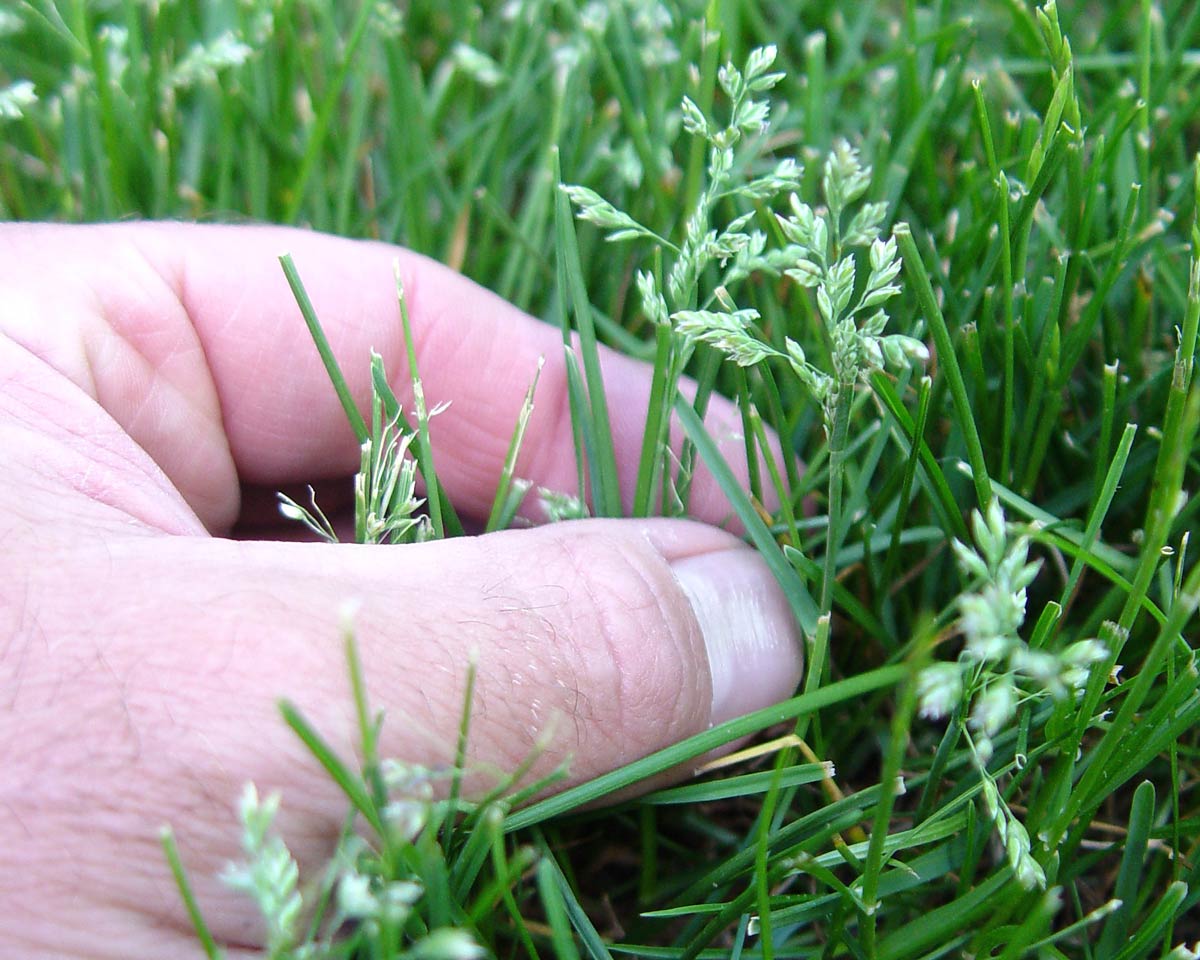
Annual bluegrass is a prolific seed producer that grows copious amounts of seed spikelets like these in spring. Photo by George Weigel
Annual bluegrass is a winter annual weed, meaning that it sprouts from seed in early to mid-fall when soil temperatures dip below 70 degrees, then covers the ground in a semi-dormant state throughout winter. It then grows into short, light-green, grassy clumps in spring that may look patchy compared to surrounding turf. As temperatures warm in spring, it becomes most noticeable when it produces pale green to whitish seedheads that keep appearing for weeks even with frequent mowing.
Key identification signs
Annual bluegrass (Poa annua) falls into the category of winter annual. It’s a plant that )
Annual bluegrass isn’t dangerous like poison ivy or aggressively smothering like kudzu. The issue is mainly appearance and performance.
In lawns, it can:
In garden beds, it shows up as bright grassy tufts among flowers and vegetables and competes for water and nutrients.
Annual bluegrass control ranges from “manageable” to “nearly impossible,” depending on how established it is and what kind of lawn you have.
Step 1: Decide if you actually need to remove it
If you don’t mind spring seedheads and the lawn doesn’t thin badly in summer, you may not need to treat it at all.
But if you want a cleaner, more uniform lawn, controlling annual bluegrass requires a multi-season plan.
Step 2: Pull young plants early (best non-chemical option)
The easiest time to remove annual bluegrass is when plants are small and newly established.
Where hand-pulling works best
Because it’s an annual with shallow roots, it often pulls out easily—especially in moist soil.
Important: Pull before it produces seedheads in spring.
Step 3: Use herbicides carefully (when appropriate)
In warm-season lawns
Selective herbicides are more likely to be available for annual bluegrass control in warm-season turf such as:
In cool-season lawns
Control is harder because many herbicides that kill annual bluegrass can also injure desirable cool-season turf.
Non-selective herbicides
Non-selective “kill-everything” herbicides will kill annual bluegrass—but they also kill surrounding grass, making them a last-resort option that usually requires reseeding or re-sodding.
In garden beds
Spot-spraying can work, but drift onto desirable plants is a serious risk.
Always read and follow the label for allowed sites, timing, and safety.
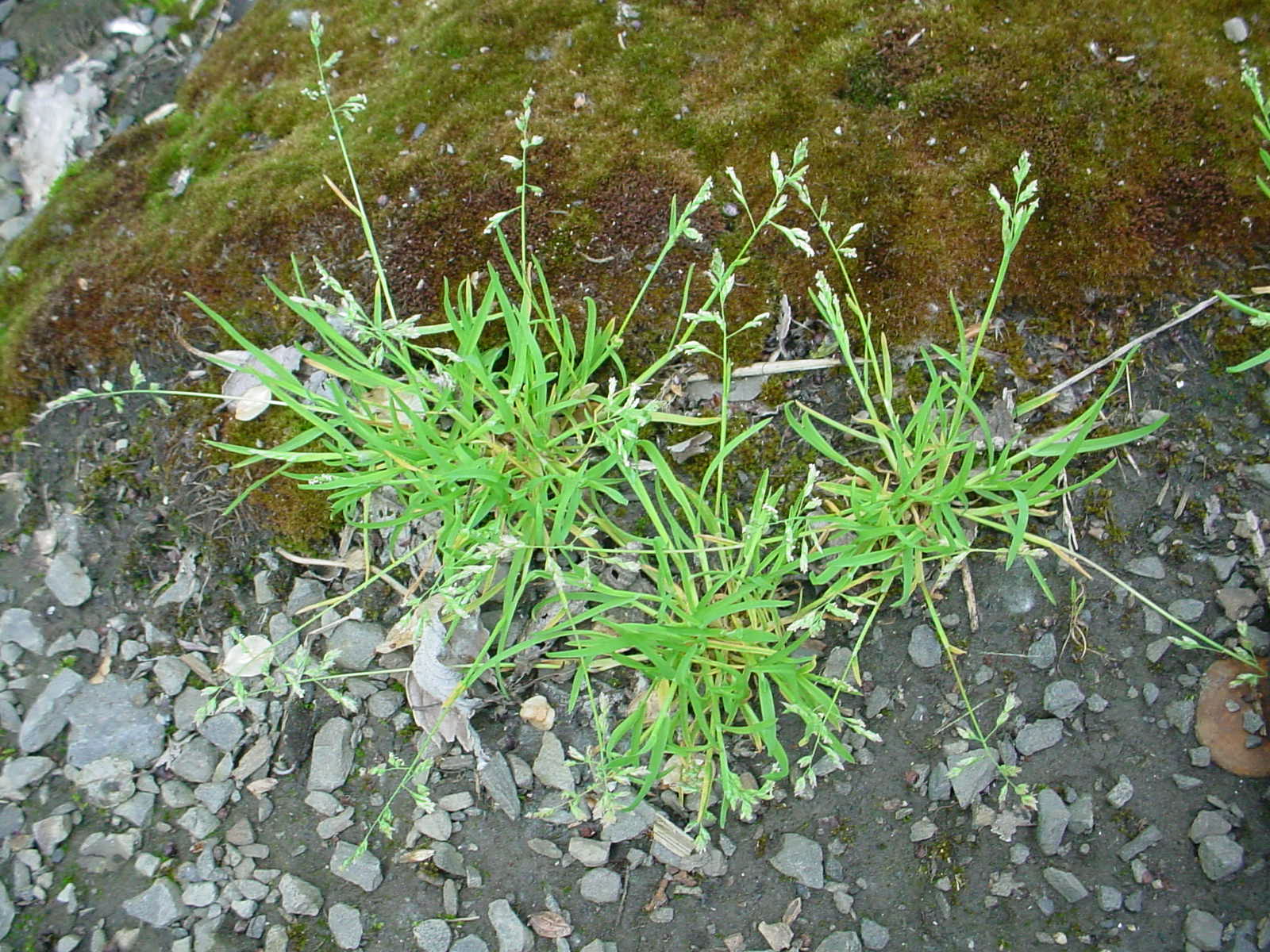
Annual bluegrass (Poa annua). Photo by XID Services
Because annual bluegrass depends heavily on new seed germination each year, prevention is far more effective than trying to fix the problem once it’s visible.
1) Grow thicker turf
A dense lawn blocks the light and space weeds need to germinate.
2) Reduce dampness and compaction
Annual bluegrass thrives in:
To make conditions less favorable:
3) Apply pre-emergent at the right time (late summer / early fall)
Pre-emergent weed preventers are the #1 tool for annual bluegrass.
Timing is everything:
Annual bluegrass germinates mostly in September and October, so pre-emergent needs to be applied by late summer—before the main germination window begins.
In warmer climates, two fall applications 8–10 weeks apart are often needed for strong control.
In flower beds and ornamental plantings, annual bluegrass is best controlled with a combination of mulch and a weed preventer.
1) Use mulch consistently
A steady layer of mulch blocks sunlight and reduces weed seed germination.
2) Use a Preen weed preventer labeled for annual bluegrass
Mulch helps, but a weed preventer adds a second layer of defense—especially for weeds like annual bluegrass that sprout heavily in fall.
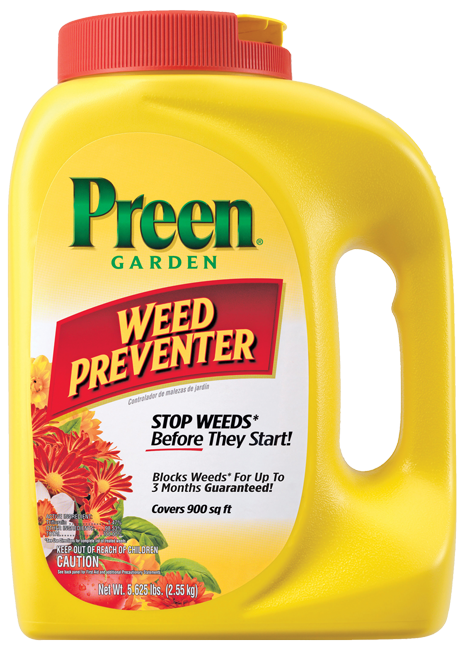
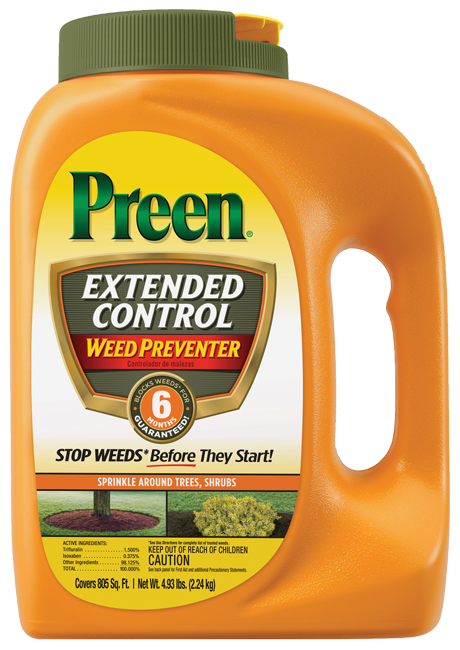
The following Preen products are labeled for preventing annual bluegrass in garden beds:
These products can be applied over the soil surface around hundreds of established plants (the label lists approved plants).
Important: Always follow label directions for application timing, placement, and plant safety.
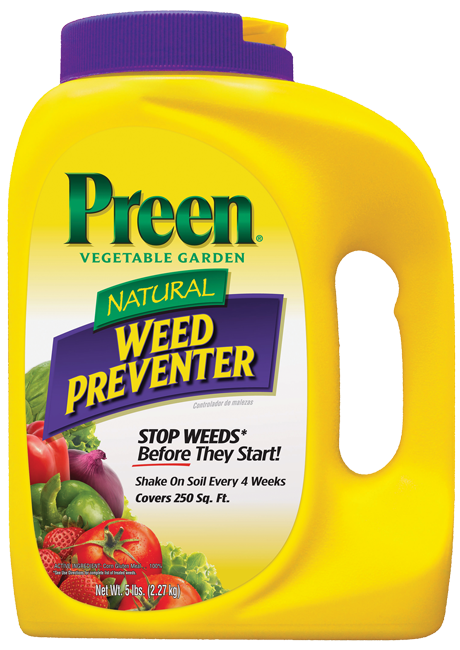
Vegetable gardeners often prefer weed prevention methods that fit organic-style gardening.
Preen Natural Weed Preventer uses corn gluten meal as a weed-preventing option for gardeners looking for a more natural approach.
As with any pre-emergent product, it works best when applied before weed seeds germinate, and it should be used according to label directions—especially in areas where you plan to direct-seed vegetables.
For lawns, these GreenView products help prevent annual bluegrass and other grassy weeds year-round:
Annual bluegrass (Poa annua) is a winter annual grassy weed that sprouts in fall, produces persistent seedheads in spring, and usually dies in summer, leaving thin spots behind.
The most effective long-term solution is to prevent germination with properly timed pre-emergent applications in late summer/early fall, along with thick turf, reduced compaction, and consistent mulch in garden beds.
What is annual bluegrass?
Annual bluegrass (Poa annua) is a winter annual grassy weed. It germinates in fall and survives through winter to form short, light green grassy clumps in early spring and produces seedheads later in spring.
When does annual bluegrass germinate?
Most annual bluegrass germinates in early to mid-fall when soil temperatures drop below about 70°F, with some germination also occurring in early spring.
What kills annual bluegrass in lawns?
Hand-pulling works for small patches. Selective herbicide options depend on whether you have warm-season or cool-season turf. The most reliable long-term control is fall pre-emergent.
When should I apply pre-emergent for annual bluegrass?
Apply pre-emergent in late summer or early fall—before September and October, which are peak germination months in many regions.
How do I prevent annual bluegrass in flower beds?
Maintain 2–3 inches of mulch and use a weed preventer labeled for annual bluegrass, such as Preen Garden Weed Preventer or Preen Extended Control Weed Preventer.